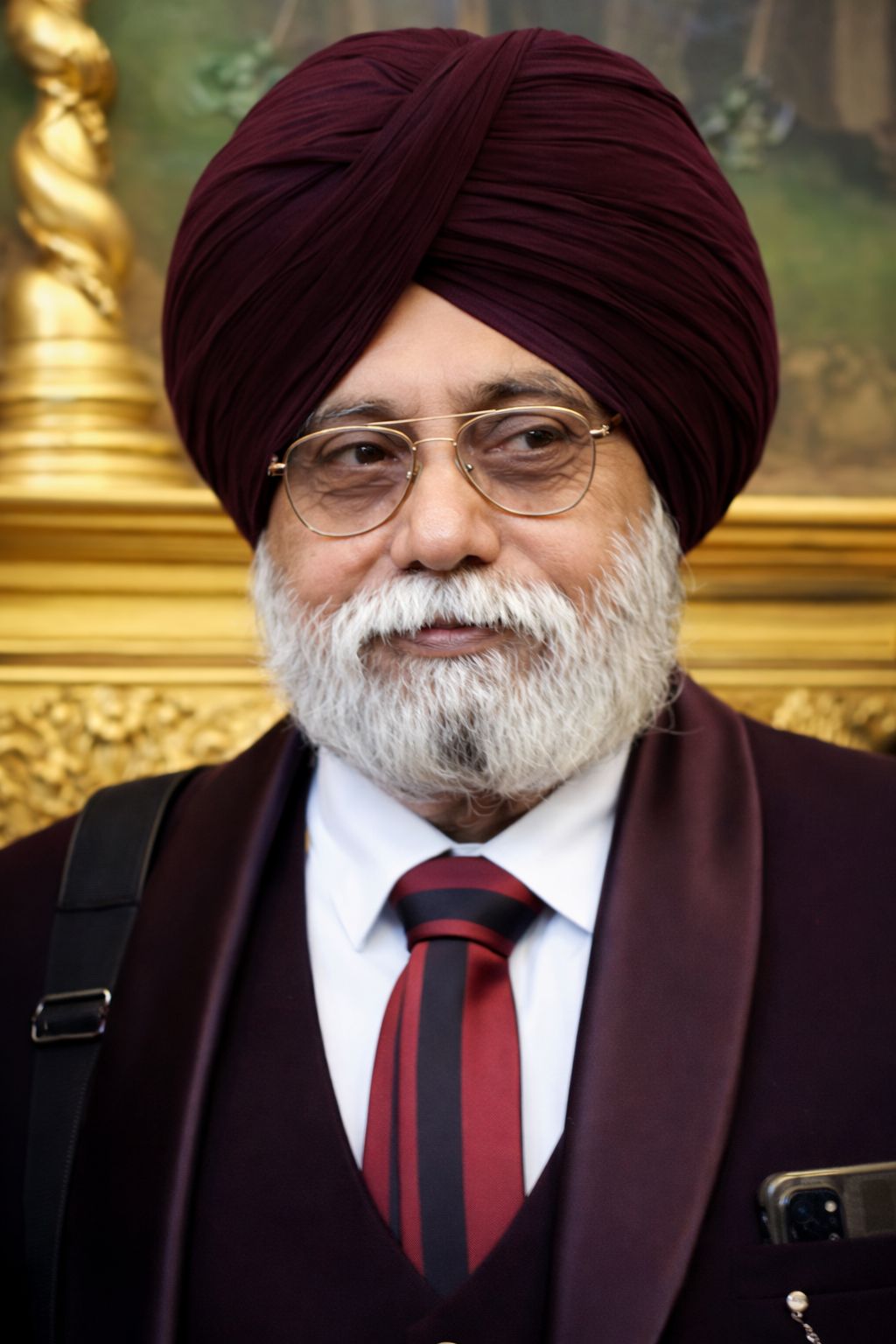
Dr. Jernail S. Anand
By Dr. Jernail S. Anand
Lord Krishna’s final advice to Arjuna was: “Thus I have explained to you knowledge still more confidential. Deliberate on this fully, and then do what you wish to do.” The choice and the responsibility remains yours. If you act with knowledge, detachment, and surrender, you break free from karma’s bondage. This is the liberating message of the Gita. Even Gurbani says: ‘Jeha beeje so lunai, karma sand-da khet’, which means, as you sow, so shall you reap, in the field called ‘action’.
According to the ‘Karma’ theory, individual soul is held responsible for his actions. If there are some other stakeholders, it is man’s body, his mind, his passions, which together bring him to take an action, and once an action has been taken, he is responsible for it, as an individual, as a soul. Those were the times when men could be considered as individuals, and, held responsible for an act, but we are living in post-modern times. Contemporary man stands splintered as an individual, and he is shaped up or unshaped by forces which are already breaking up under grave stress and strain. It goes to Shakespeare’s credit that in Hamlet he created a timeless character, who is most relevant to our times as well. A divided personality. [To be or not to be] Men’s decisions in these times are shaped by a complex of emotions, hard to classify. In fact, the man who acts is not a whole, but a divided self, and in this division, we can locate several influences which lead him to take his decisions which then are translated into actions.
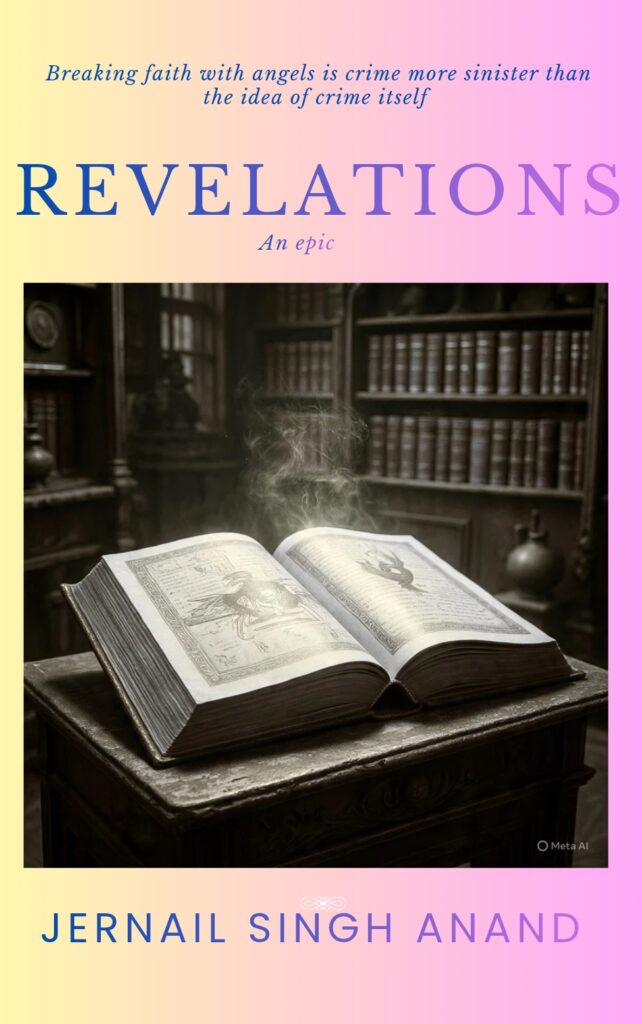
The Radical Ethics: Associated Responsibility
The core idea of “Associated Responsibility” (or collective guilt), which figures in Canto III of my latest epic ‘Revelations’ which is considered intellectually daring, pushes us beyond individual ‘karma’ to interrogate intergenerational and institutional complicity: parents, teachers, even the broader academic ecosystem that “nurtured” corruption. This creates a genuine philosophical tension is justice served by isolating the sinner, or does true rectification demand uprooting the Entire chain of influence?
It is, in fact, an attempt to re-engineer the ‘Karma’ philosophy from a post-modernist stand point. Poetus, a character in the play, acts as a Socratic provocateur, forcing God to confront an uncomfortable expansion of accountability. He pleads that if a man commits a crime, he alone cannot be held entirely responsible. He submits that there are many people who failed in performing their moral duty, and, therefore, they too are stakeholders in the crime, and should be summoned and suitably punished.
The case relates to Sinnaraux, a Vice-Chancellor who is caught selling degrees. Poetus appeals to God that his parents, his teachers and other silent partners, in other words, the entire ecosystem which helped him in his crime be arraigned. It was the first case of its kind in which the theory of ‘karma’ which held the individual responsible, was given a wider operational interpretation, so as to include all those who help in the committing of an immoral act.
As a result, his dead parents are summoned from Purgatory. His teachers are also dragged in the court, some dead and some alive. They are publicly shamed. The VC is sent back, with a sinister punishment. All his degrees are forfeited. His face was to be blackened, and he was to stay in the Campus of his University, for 7 years as a living example of a moral crime. The episode shows how the moral architecture of a university, a microcosm of civilization, crumbles not from one man’s ‘Karma’, but from a web of neglect: the parents who prioritized status over character, the teaches who taught skills without ethics, and the collective silence that normalized the rot.
Thus, Associated Responsibility is a modification over the traditional ‘karma’ theory which is ‘individual centric’, while Associated Responsibility is “ecosystem-centric” which indicts the society that glorifies greed. Italian philosopher Mauro Montacchiesi describes the Associate Responsibility as radical ethics and “a philosophical innovation of remarkable depth.” He believes that Anand redefines ethical causality as relational, in view of the fact that “the idea that moral accountability operates well outside the bounds of the individual to encompass formative structures such as society, education and family, highlights a fully articulated distancing from classical doctrines of ‘karma’.
Dr. Jernail S. Anand, with a whopping 200 books [18 epics] is a formidable presence in the contemporary world literature, a polymath, and a vital architect of the 21st century ethical literature whose seminal work ‘Lustus: The Prince of Darkness’ challenges the moral complacency of our era. Founding President of the International Academy of Ethics, and Laureate of Charter of Morava [Serbia], Seneca [Italy], Franz Kafka [Germany, Ukraine, Czeck Rep], Maxim Gorky [Russia] Soka Ikeda and Mahakavi Bharati [India] awards, his name is inscribed on the Poets’ Rock in Serbia. Email: anandjs55@yahoo.com.
Bibliography:
https://sites.google.com/view/bibliography-dr-jernal-singh/home
About the Author