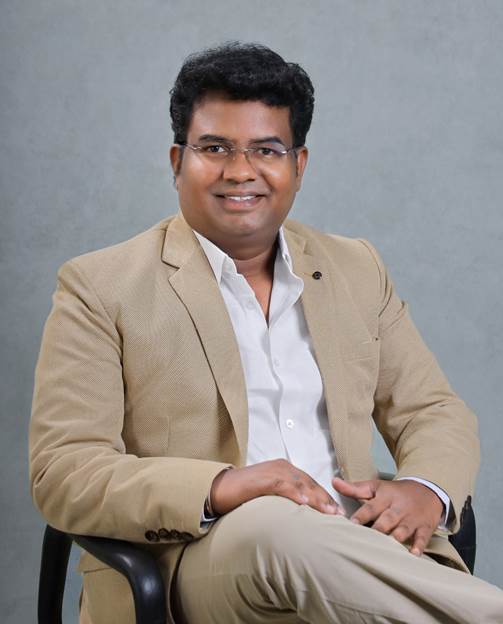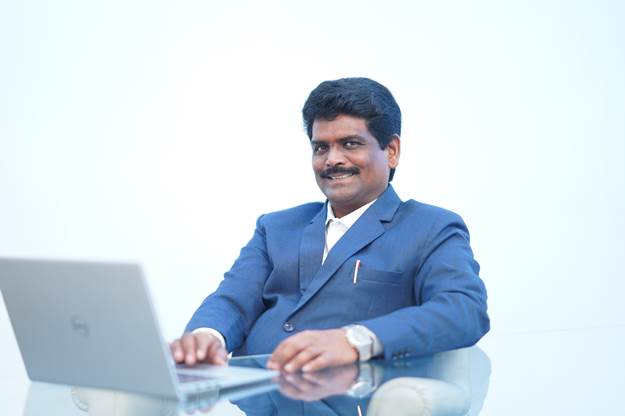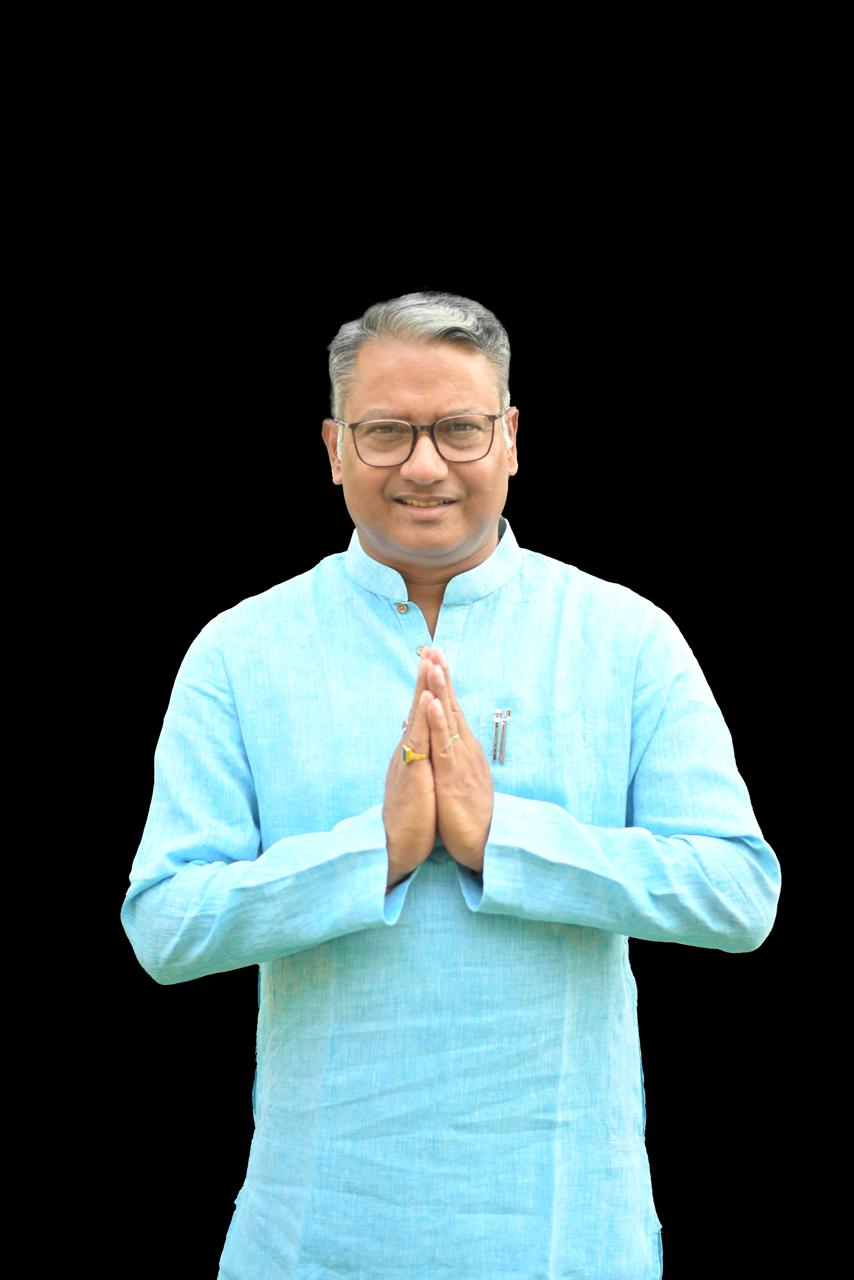
Jagannath Chattopadhyay
Jagannath Chattopadhyay is a name that has steadily echoed through the Political corridors of Bengal in recent years. Yet, beyond the political spotlight lies a remarkable journey that many are
only beginning to discover a journey of one of Bengal’s most respected and decorated journalists, whose career in the press has been adorned with countless accolades and moments of quiet courage.
Endowed with a sharp, perceptive mind, an incisive wit, and an effortless command over words, Jagannath seemed destined for public life long before he formally stepped into politics. His voice carried weight, his thoughts carried clarity, and his work carried purpose.
To truly understand the man he is today, one must return to where it all began to the humble, deeply rooted foundations that shaped his character.
Born into a traditional Brahmin family in Siuri, Birbhum, Jagannath’s childhood was steeped in spirituality and discipline. His father, Shri Bhubaneshwar Chattopadhyay, a man of ascetic
inclination, led a life devoted to religious practices, satsang, and sacred pilgrimages. His mother, a devoted homemaker and disciple of Brahmaswarup Shri Shri Sitaram Omkarnath ji, brought warmth, balance, and devotion into the household. Together, they created an environment where faith was not imposed, but lived gently shaping young Jagannath.
Growing up in such an atmosphere, it was only natural that Jagannath developed a deep connection with Sanatani philosophy and values. At a young age, he joined the Rashtriya
Swayamsevak Sangh (RSS), where discipline, service, and nation-first thinking became integral to his identity.
Academically gifted and driven, he pursued his Master’s degree in Journalism from the prestigious University of Calcutta, specializing in Sino-India relations an Indication of his early inclination
towards geopolitics and public affairs. As India stepped into the transformative era of economic liberalization in the 1660s, Jagannath stepped into the dynamic world of media, ready to make his mark.
What followed was nothing short of an extraordinary three-decade journey.
From newsroom deadlines to the frontlines of history, Jagannath’s career was defined by courage and commitment. During the harrowing 26/11 Mumbai attacks in 2008, he stood among the few brave Bengali journalists who reported live from the ground, capturing the unfolding siege of the Taj Hotel with fearless integrity. His coverage not only informed millions but also earned him rare recognition from the administration of the time.
His global exposure further enriched his perspective. He was part of the press delegation that welcomed His Holiness the Dalai Lama in Ladakh in 2006. In 2010, he underwent elite war-zone training Defence Correspondents’ Course conducted by the Joint Staff of the Indian Military an honour reserved for select journalists for obtaining the necessary qualification for reporting from conflict zones. That same year, he was awarded the prestigious Jefferson Fellowship, taking him across Hawaii, Japan, South Korea, and China—an experience that broadened his worldview and sharpened his analytical depth.
Back in Bengal, Jagannath evolved into a formidable investigative journalist. With unwavering courage, he broke some of the state’s most significant stories from the Saradha scam to major money laundering rackets involving dairy fraud, coal, and cattle smuggling. His work was already metamorphosing – transcending journalism and moving into the domain of wider public service. It earned him not only acclaim but deep respect among peers and the public alike.
As his career soared, he became synonymous with credibility covering Chief ministers on international visits and embodying a rare blend of neutrality and responsibility in journalism.
Yet, at the pinnacle of this illustrious career, a deeper calling emerged.
In 2021, driven by a desire to give back to the land that nurtured him, Jagannath stepped into active politics and social service. It was not a departure from his past but a natural continuation of his lifelong commitment to society.
In just a few years, his work on the ground has begun to speak for itself. From addressing long- standing bottlenecks in the Rajnagar rail project to playing a pivotal role in the completion of the
Haatjan Bazar flyover, his efforts have translated into tangible progress. He has worked tirelessly to improve railway connectivity—ensuring increased stoppages of superfast and express trains at Siuri and Chinpai, advocating modernization of stations, and strengthening links with surrounding suburban areas.
But beyond infrastructure, his vision is deeply human.
As he prepares to contest from the Siuri constituency in the 2026 Bengal Vidhan Sabha elections, Jagannath Chattopadhyay stands not just as a candidate, but as a son of the soil seeking the blessings of his people. His dream is to transform Birbhum into a vibrant, development-driven
socio-economic hub—where connectivity fuels opportunity, infrastructure empowers lives, jobs uplift families, and growth is both sustainable and inclusive.
At the heart of his journey lies a simple yet powerful belief that true progress is meaningful only when it reaches everyone.
Guided by this ethos, and inspired by the spirit of “Sabka Saath, Sabka Vikas”, Jagannath moves forward with humility, purpose, and an unwavering commitment to serve.
His story is not just about achievements.
It is about intent, integrity, nationalism and the enduring hope to make a difference.
Back in Bengal, Jagannath evolved into a formidable investigative journalist. With unwavering courage, he broke some of the state’s most significant stories—from the Saradha scam to major money laundering rackets involving dairy fraud, coal, and cattle smuggling. His work was already metamorphosing – transcending journalism and moving into the domain of wider public service. It earned him not only acclaim but deep respect among peers and the public alike.
As his career soared, he became synonymous with credibility covering chief ministers on international visits and embodying a rare blend of neutrality and responsibility in journalism.
Yet, at the pinnacle of this illustrious career, a deeper calling emerged.
In 2021, driven by a desire to give back to the land that nurtured him, Jagannath stepped into active politics and social service. It was not a departure from his past but a natural continuation of his lifelong commitment to society.
In just a few years, his work on the ground has begun to speak for itself. From addressing long- standing bottlenecks in the Rajnagar rail project to playing a pivotal role in the completion of the
Haatjan Bazar flyover, his efforts have translated into tangible progress. He has worked tirelessly to improve railway connectivity—ensuring increased stoppages of superfast and express trains at Siuri and Chinpai, advocating modernization of stations, and strengthening links with surrounding suburban areas.
But beyond infrastructure, his vision is deeply human.
As he prepares to contest from the Siuri constituency in the 2026 Bengal Vidhan Sabha elections, Jagannath Chattopadhyay stands not just as a candidate, but as a son of the soil seeking the blessings of his people. His dream is to transform Birbhum into a vibrant, development-driven
socio-economic hub—where connectivity fuels opportunity, infrastructure empowers lives, jobs uplift families, and growth is both sustainable and inclusive.
At the heart of his journey lies a simple yet powerful belief—that true progress is meaningful only when it reaches everyone.
Guided by this ethos, and inspired by the spirit of “Sabka Saath, Sabka Vikas”, Jagannath moves forward with humility, purpose, and an unwavering commitment to serve.
His story is not just about achievements.
It is about intent, integrity, nationalism and the enduring hope to make a difference.
About the Author