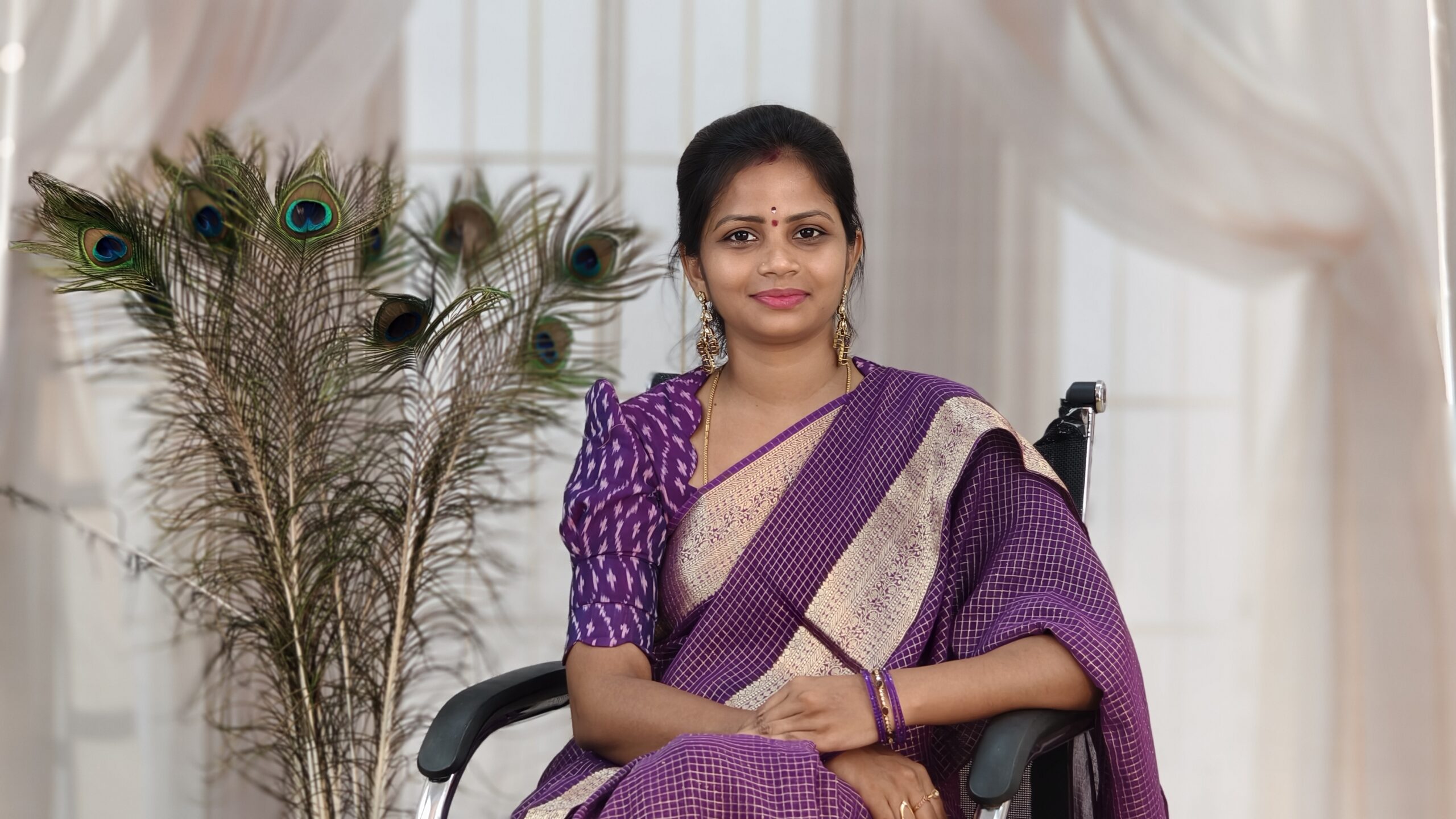
Vemula Ramya
When Vemula Ramya began selling imitation jewellery from her home in March 2018, she did not have a shop, staff, or large capital. She had ₹500, a small set of products, and the need to find work that would fit around her family life and health limits. Eight years later, the business she built, now known as Ramyanagendra Imitations Private Limited, reports an annual turnover of around ₹10 crore, runs three outlets in Telangana, and serves customers across the Telugu states.
In the market, she is widely known as RamyaNagendra. The name has become closely linked with black bead jewellery, or nallapusalu, and with live sales in Telugu that reach thousands of buyers each week. On Instagram, the brand connects with more than 360,000 followers, while its YouTube channel has crossed 100,000 subscribers.
Early Years Shaped by Tailoring
Vemula Ramya was born in 1994 in Jagtial, Telangana. Her first training in work did not come from a classroom or office. It came from her mother, a tailor who trained more than 100 women in the area. From a young age, Ramya learned how to cut and stitch garments and later used that skill to run a small tailoring setup from home.
This work gave her a steady income and a strong link with local customers. It also taught her how to manage time, handle deadlines, and keep quality consistent. Over the years, however, the physical strain of long hours at the sewing machine began to show. Severe back pain made it difficult for her to continue tailoring at the same pace.
A Need to Change Course
The health problem came at a time when she also had a young child at home. With both physical limits and family duties in mind, Vemula Ramya began to look for another way to earn. She wanted something that could start small, be handled from home, and grow without heavy physical work.
Imitation jewellery became that option. In March 2018, she used ₹500 from her savings to buy a small batch of products and test whether she could sell them. There was no fixed plan and no safety net. The aim was simple: see if customers would buy and learn from each sale.
The Reality of a Small Start
The first months were slow and uncertain. Vemula Ramya and her husband, Nagendra, travelled long distances on a two-wheeler to source stock, often with their infant child along. Every purchase had to be planned, because unsold items meant money stuck on the shelf.
Sales came through personal contacts and early social media posts. Orders were packed at home. Customer calls and messages were answered directly by her. The business was small, but each order brought new lessons about pricing, demand, and customer expectations.
Using Live Video to Build Trust
As online platforms became more important, Vemula Ramya began using live video in Telugu to show products and take orders. Known to customers as RamyaNagendra, she used these sessions to explain prices, show details, and answer questions in real time. This made buyers more comfortable, since they could see what they were paying for.
When COVID-19 lockdowns began in 2020, this method became the main sales channel. With physical markets closed, many customers turned to online buying. Orders increased, and the business entered a phase of rapid activity.
Managing the Lockdown Without a Team
The rise in demand came with serious challenges. Courier services slowed, transport routes were blocked, and delivery times stretched. At that stage, there was no team. Vemula Ramya handled everything herself, from live sales and customer communication to packing and arranging dispatch.
She kept customers informed about delays and continued working through the backlog step by step. Over time, every pending order was delivered. This period helped the brand build a strong base of repeat buyers who valued clear communication and follow-through.
A Setback That Changed the Way of Working
As the business grew, it faced a major setback. At one point, inventory worth about ₹6 lakh did not sell. For a self-funded venture, this was a heavy loss. The experience forced a change in how stock was chosen and bought.
After this, sourcing became more careful. The focus shifted to designs with proven demand, and bulk buying of untested items was reduced. Stock planning and cash tracking became stricter, helping the business move forward with fewer risks.
Finding Strength in a Clear Category
One segment began to stand out: black bead jewellery, known locally as nallapusalu. These designs have strong cultural value in the Telugu states, and customers often look for variety within this style. The brand chose to build depth in this category, adding hundreds of variations over time.
Along with this focus, the company introduced a clear entry price point near ₹399 to make first purchases easier. The idea was to keep products within reach for new buyers and offer higher-priced designs to those who returned. Today, the catalogue includes more than 1,600 designs across different jewellery types.
A Shift to a Formal Company
By 2025, the business had moved far beyond its home-based roots. In February 2025, it was incorporated as Ramyanagendra Imitations Private Limited. This step brought more structured systems for accounts, sourcing, and daily operations.
The company now runs three outlets in Jagtial, Mancherial, and Hyderabad’s Saroornagar area. It also sells through its own website and social media platforms and holds sales expos in several cities for customers who prefer to see products in person.
Jobs and Daily Scale
With growth came employment. The company now supports close to 100 women through its stores, packing units, and support work. During busy periods, it handles up to 500 orders a day, which requires careful coordination between online sales, store stock, and logistics.
Two Names, One Journey
In official records, she is Vemula Ramya. In the market, customers know her as RamyaNagendra. Both names now point to the same journey: a move from home-based tailoring to running a growing jewellery business that blends digital sales with physical stores.
Looking Ahead
The company plans to add more outlets and expand its expo network across Telangana and Andhra Pradesh. It also aims to widen its design range and work more with traditional artisans on new collections. On the digital side, the focus remains on improving how live sales connect with online orders and store stock.
From a ₹500 start in March 2018 to a reported ₹10 crore turnover, the story of Vemula Ramya shows how steady work, regional language reach, and direct customer contact can build a strong retail business in South India without rushing the process.
About the Author