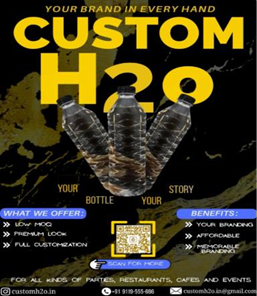
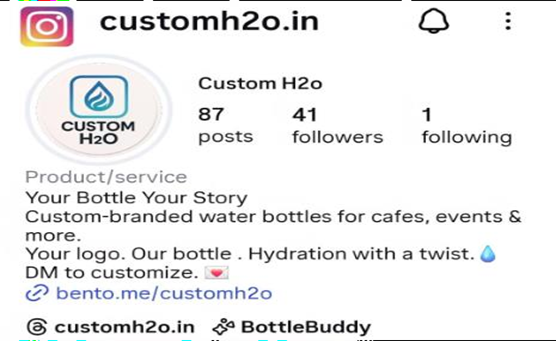
Custom H2O
Why Simplicity Is Becoming a Competitive Advantage Rethinking Bottled Water in a Design-First World
In a market flooded with options, louder claims, and constant visual clutter, simplicity is no longer a lack of ambition. It is a strategic choice. Across industries, consumers are quietly shifting their expectations. Function alone is no longer enough. Design, consistency, and experience now carry equal weight. Everyday products are expected to reflect intention, not excess.
This shift is particularly visible in categories once considered purely utilitarian. Bottled water is one such example. Long treated as a commodity driven by price and distribution, it rarely received the same level of thought as other elements within curated spaces. That gap is where Ajay Panjwani began to observe a deeper opportunity. It would later take shape through Custom H2O, a design-first approach to bottled water rooted in restraint rather than reach.
Seeing the Gap Others Ignored
The turning point did not come from ambition alone, but from frustration. For years, the bottled water industry appeared crowded yet hollow. Shelves were full, but little felt
intentional. Most brands competed aggressively on visibility and pricing, leaving no room for identity or recall. Water was positioned as a necessity, not a touchpoint.
The contrast became clear while observing premium cafes and private events. Every element, from lighting and tableware to music, was carefully curated. Yet the premium bottled water placed on tables often felt disconnected from the rest of the experience. Something every guest interacted with lacked the same level of thought.
That disconnect revealed a branding problem hiding in plain sight. Entering the space was not about selling water. It was about redefining how a simple product could carry memory, restraint, and credibility.
Building Custom H2O: Restraint Over Reach
With Custom H2O, the approach was deliberate. Instead of chasing volume, the focus remained on design-first thinking, consistent quality, and controlled growth. The objective was not to dominate shelves, but to exist naturally in environments where detail already mattered.
Convincing decision-makers that water could function as a branding medium was not immediate. Many viewed the category as low involvement and resistant to differentiation. Changing that perception required time and consistency rather than persuasion.
Customization was introduced selectively. Personalized bottles were designed to complement environments rather than compete within them, ensuring the product remained part of the setting rather than the statement.
Equally important was the discipline to say no. Early opportunities often came with pressure to compromise standards for faster scale. Choosing restraint meant slower growth, but it protected long-term identity.
When Minimalism Leaves No Room for Error
Minimalism demands operational precision. Without excess to mask inconsistencies, every detail becomes visible. Packaging accuracy, supplier alignment, and quality control required consistency at every stage. Each bottle had to reflect the same intent as the brand itself.
Progress during this phase was quiet and repetitive. Maintaining direction without external validation became one of the most demanding aspects of the journey. Growth occurred without announcements, metrics, or noise.
Subtle Achievements That Signal Trust
The earliest indicators of success were behavioral rather than numerical. Premium cafes and private event organizers began placing repeat orders without follow-ups. That pattern signaled trust, not impulse.
Over time, the brand found natural relevance within hospitality branding, where cohesion and subtlety often matter more than overt visibility. Rather than competing for attention, the product blended into curated spaces.
Another shift became noticeable. Bottles were no longer replaced or hidden quickly. They remained visible on tables, suggesting acceptance rather than promotion.
Perhaps the most enduring achievement has been consistency. In an industry where relevance often fades quickly, maintaining clarity without dilution has become a long-term advantage.
Accessibility Without Dilution
What distinguishes the approach is balance. Custom H2O participates in personal moments, small gatherings, birthdays, and community initiatives, without altering quality or design. The same standards applied in premium environments extend to intimate ones.
This consistency reinforces credibility. Quality is not conditional. Scale does not determine standards.
Early Drive and a Mature Mindset
At just 20 years old, Ajay Panjwani demonstrates a level of strategic maturity uncommon at that stage. His decisions reflect patience over urgency and alignment over expansion.
Collaborations, customization, and growth are approached with long-term coherence in mind.
Custom H2O mirrors this mindset. Its evolution reflects careful observation, calculated risk-taking, and the willingness to let the product speak before explanation becomes necessary.
Motivation Rooted in Endurance
The work has never been driven by trends or hype. At its core lies a commitment to standards. Growth remains selective, prioritizing relevance in the right spaces over visibility everywhere.
This philosophy reflects a broader shift toward design-led products, where longevity and intention increasingly outweigh speed and scale. When simplicity is executed with discipline, it creates quiet credibility.
The long-term goal is endurance. To build something that continues to feel intentional years later, regardless of changing market cycles.
In an age driven by volume and visibility, the story of Ajay Panjwani and Custom H2O suggests a different path. That discipline, when applied consistently, does not chase attention. It earns trust quietly and over time.
About the Author