In the second day of the 2nd World Vedic Conference, the Rishi Atharva-Kanva session, was dedicated to the Third World Vedic Microbiology Conference, focusing on the theme of “Vedic Panchamahabhuta Microbiology.” AtharvaKanvaKuladhipati Dr. Chakradhar Frend pioneered the presentation of “Vedic Panchamahabhuta (Earth, Water, Fire, Air and Space) Microbiology” as a new branch under Vedic microbiology, linking microorganisms (like bacteria, protozoa) to the five elements and the Ayurvedic principles of Vata, Pitta, and Kapha. He stated a groundbreaking conceptual conclusion, based on Ayurvedic principles, proposes that the formation of a bacterial biofilm is analogous to an imbalance of the Kapha dosha. Biofilms are complex, slimy microbial communities—encased in self-produced extracellular polymeric substances (EPS). —that adhere to surfaces. This protective, sticky matrix allows common pathogens such as Pseudomonas aeruginosa, Staphylococcus aureus, and E. coli to thrive. The analogy suggests that this dense, protective, and inherently sticky nature of the biofilm parallels the qualities of excess Kapha (responsible for structure, lubrication, and stability in Ayurveda), offering a novel conceptual framework for understanding and potentially treating chronic, device-related, and wound infections. Further Dr. C. Frend stated that- The phenomenon of bacterial bioluminescence—the emission of light—can be conceptually viewed as a manifestation of the Pitta dosha factor in Ayurveda. Pitta is responsible for radiant and transformative characteristics. This light is primarily produced by bacteria from genera such as Vibrio, Photobacterium, and Aliivibrio (family Vibrionaceae), along with Shewanella and Photorhabdus. Key luminescent species, including Aliivibrio fischeri and Vibrio harveyi, generate this light through a genetic system known as the lux operon. In line with the conceptual application of Ayurvedic principles to microbiology, amoeboid movement and bacterial locomotion (motility) are attributed to the Vata dosha factor. Vata, known for governing all movement, circulation, and change within the body, conceptually aligns with the dynamic, swift, and often unpredictable movement observed in microorganisms. This includes Amoeboid movement (using pseudopods). Bacterial locomotion (via flagella, gliding, or twitching). Dr. Chakradhar Frend’s dedication to the field of Vedic Microbiology spans nearly three decades, beginning during his undergraduate studies (1996-1999) and continuing through his postgraduate years (1999-2001) up to the present day. His extensive research in this domain has culminated in the authorship of numerous specialized books on Vedic Microbiology, significantly contributing to the integration of ancient Vedic knowledge with modern microbial science.
Trio of Books Launched at Microbiology Conference
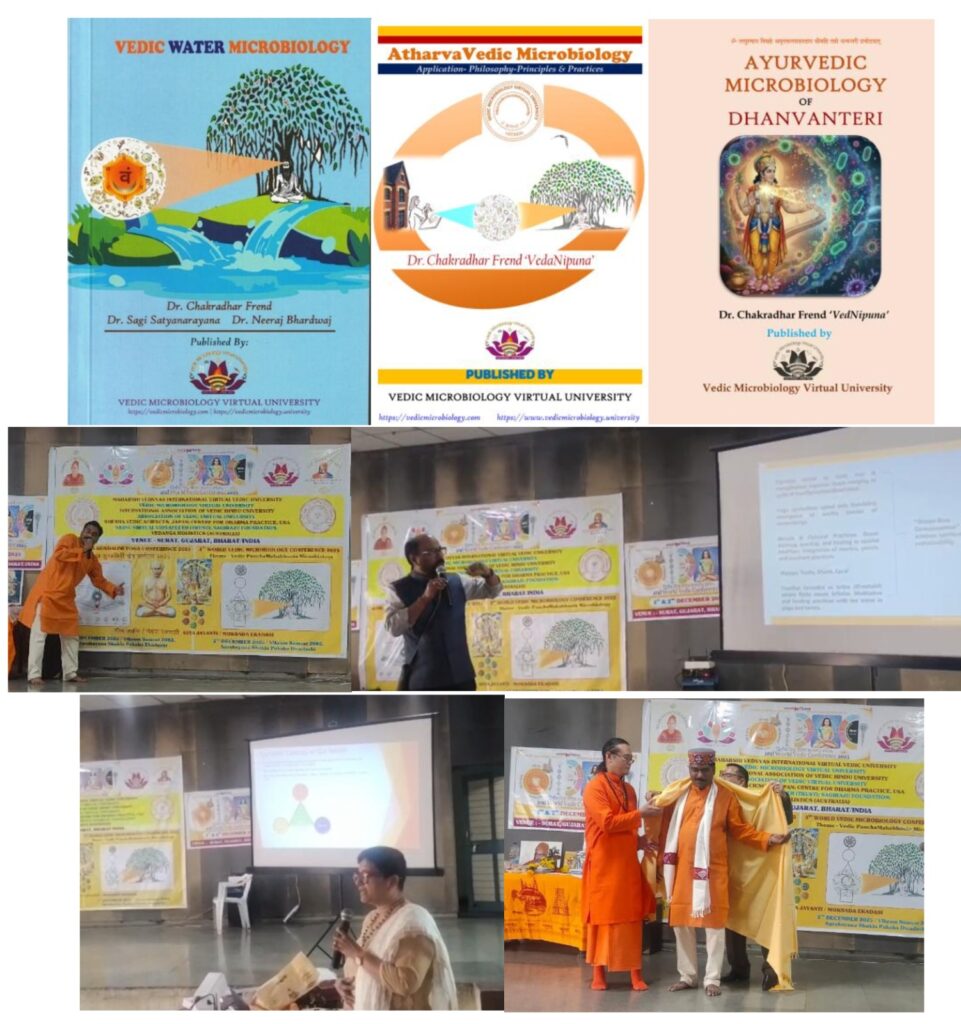
A highlight of the Third World Vedic Microbiology Conference was the official launch of three specialized books, further cementing the convergence of Vedic Microbiology.
The newly released books, authored or co-authored by Dr. Chakradhar Frend, are:
o ‘Vedic Water Microbiology’: Authored by Dr. Chakradhar Frend & Co-authored by Dr. Sagi Satyanarayana, and Dr. Neeraj Bhardwaj. Dr. Frend explained that this work uniquely incorporates and analyzes knowledge from the Vedas, Puranas, Upanishads, Ayurveda, Vastu Shastra, and Astrology, aiming to provide a new impetus for innovation and exploration in Vedic microbiology.
o ‘Atharvavedic Microbiology’- This book specifically focuses on the microbiological knowledge enshrined within the Atharvaveda, paying special tribute to the ancient Atharvavedic Rishis of Microbiology.
o ‘Ayurvedic Microbiology of Dhanvantari’- Dr. Frend stated that this text highlights the contribution of Bhagwan Dhanvantari (the physician of the Gods in Ayurveda) to the field of Vedic Microbiology. It elaborates, interprets, and explains the shlokas (verses) mentioned by Dhanvantari in terms of Modern Microbiology.
These publications represent a significant step in establishing Vedic Microbiology as a dedicated field of study.
Dr. Shriji Kurup gave a special presentation on oceanography, microbiology, and spirituality. Dr. Shriji Kurup mentioned about the spiritual significance of Samundra Mantra (Churning of Ocean), the significance of Shankha (conch shell), Coral (Munga) etc.
Dr. Shriji Kurup’s presentation was based on a fascinating intersection between the empirical world of marine science and the metaphysical insights of Vedic spirituality. By bridging oceanography and microbiology with ancient symbols like the Shankha and Coral, he illustrated how the ocean is viewed not just as a resource, but as a source of cosmic consciousness.
The Samudra Manthan (Churning of the Ocean) is one of the most profound allegories in Vedic literature. Dr. Kurup highlighted that this isn’t just a mythological tale, but a representation of the inner journey of the soul and the biological evolution of life.
· The Churning Process: In oceanography, the mixing of layers (upwelling) brings nutrients to the surface, sparking life. Spiritually, the churning represents the struggle between the Devas (positive tendencies) and Asuras (negative tendencies) within the human mind.
Dr. Kurup emphasizes the Shankha as a bridge between microbiology and spiritual practice.
· Microbiological Impact: From a scientific perspective, the sound frequency produced by blowing a Shankha is believed to have a “bactericidal” effect. The vibrations can disrupt the cellular integrity of certain harmful microorganisms, effectively purifying the surrounding air.
· Sacred Geometry: The internal structure of the Shankha follows a Fibonacci spiral (Golden Ratio). This same pattern is found in galaxies and DNA, suggesting that the shell is a physical manifestation of universal mathematical order.
· Symbolism: It represents the Nada Brahma (The Sound of Creation). In rituals, it symbolizes the “Aum” vibration, which aligns the human nervous system with the rhythms of the ocean.
In his discussion on microbiology and oceanography, Dr. Kurup points to Coral as a symbol of community and life-force (Prana).
· Biological Symbiosis: Corals are a marvel of microbiology, existing through a symbiotic relationship between polyps and algae (zooxanthellae). Dr. Kurup relates this to the spiritual principle of Vasudhaiva Kutumbakam (The World is One Family)—where different life forms must cooperate to survive.
· Astrological and Healing Significance: In Vedic astrology, Red Coral (Munga) is associated with the planet Mars (Mangal), representing energy, blood circulation, and vitality. Scientifically, coral calcium is highly bioavailable and has been used in bone grafting, showing a literal connection between the “bones” of the ocean and the bones of the human body.
Microbiology and the “Invisible” Life
A key takeaway from Dr. Kurup’s presentation is the reverence for the invisible.
· The Microbial Soup: Just as spirituality speaks of an all-pervading “Brahman,” the ocean is filled with billions of microbes per liter that sustain the Earth’s oxygen and carbon cycles.
· Spiritual Humility: Understanding that 90% of the ocean’s biomass is microbial humbles the human ego, aligning with spiritual teachings that the smallest entities often hold the greatest power in the cosmic order.
Chitra Chaudhary, who is pursuing PhD in Vedic Fire Microbiology from the Vedic Microbiology Virtual University, informed the audience about her research topic and its significance in modern times. Chitra Chaudhary’s doctoral research at the Vedic Microbiology Virtual University focuses on the scientific validation of Vedic Fire Microbiology, specifically investigating the antimicrobial and air-purifying properties of traditional Yajna and Agnihotra rituals. Her work explores how the thermal decomposition of specific medicinal herbs (Samidhas), clarified butter (Ghee), and cow dung in a controlled fire produces a unique medicinal aerosol that significantly reduces the environmental load of pathogenic bacteria, fungi, and viruses. In modern times, this research is of paramount significance as it offers a sustainable, chemical-free alternative for public health sanitation, particularly in addressing indoor air pollution and the rising threat of antibiotic-resistant “superbugs.” By bridging ancient Sanskrit manuscripts with contemporary microbiological assays, her research demonstrates that these ancient fire technologies can serve as a holistic, eco-friendly method for maintaining biological hygiene and enhancing human vitality in urban environments.
Key Aspects of the Research
· Environmental Purification: Measuring the reduction of airborne microbial colonies before and after the ritual.
· Aerosol Therapy: Analyzing the therapeutic volatile organic compounds (VOCs) released during the combustion of medicinal woods like Sandalwood and Devadaru.
· Microbial Diversity: Understanding how “Socio-Microbiology” can use rituals to favor beneficial microbes while neutralizing harmful ones.
· Sustainability: Evaluating the ritual as a non-toxic method for soil and water purification in agricultural settings.
Dr. Varsha Parkar’s presentation, delivered as a research scholar of Vedic Medical Microbiology at the Vedic Microbiology Virtual University, explores the cutting-edge fusion of ancient wisdom and modern bioscience through the lens of Ayurnutragenomics and Gut Microbiology. Her work focuses on how the human gut microbiome—often referred to in Ayurveda as a manifestation of Agni (the digestive fire) and Sahaj Krimi (commensal microbes)—acts as the primary mediator between diet and genetic expression. By integrating the Ayurvedic concept of Prakriti (individual constitution) with modern nutrigenomics, Dr. Parkar illustrates how personalized dietary regimens can modulate the microbial ecosystem to prevent systemic diseases and optimize metabolic health. This “Ayurveda Microbiology” approach provides a scientific framework for the traditional practice of using specific foods and herbs to “feed” the right microbes, thereby aligning one’s internal biological environment with their unique genetic blueprint. In modern times, her research is vital for the development of P4 medicine (Predictive, Preventive, Personalized, and Participatory), offering a holistic path to health that transcends the “one-size-fits-all” nutritional model.
Core Pillars of Her Research
· Ayurnutragenomics: The study of how nutrition tailored to an individual’s Prakriti (Vata, Pitta, or Kapha) influences gene expression and long-term health outcomes.
· The Agni-Microbiome Link: Establishing a scientific correlation between the strength of one’s “digestive fire” and the diversity and resilience of their gut microbiota.
· Vedic Medical Microbiology: A specialized field that uses modern microbiological tools to validate the antimicrobial and probiotic properties of Ayurvedic formulations like Takra (buttermilk) and Triphala.
· Personalized Preventive Health: Utilizing microbial profiling to create highly specific “Pathya” (dietary guidelines) that prevent the onset of chronic lifestyle disorders.
Convocation Ceremony: Prof. Dr. Swami Shri Bhanuputra Mangalananda Ji Maharaj (Surendra Rajbhat University, Thailand) was awarded an Honorary Doctorate in Vedic Microbiology by AtharvaKanvakuladhipati Dr. Chakradhar Frend and Dr. Shriji Kurup, of the Vedic Microbiology Virtual University.
Award: Dr. Neeraj Bhardwaj (B.K. Institute of Medical Science, Patiala, Punjab) was awarded the Global Vedic Microbiology Excellence Award for his contribution in the book –‘Vedic Water Microbiology’.
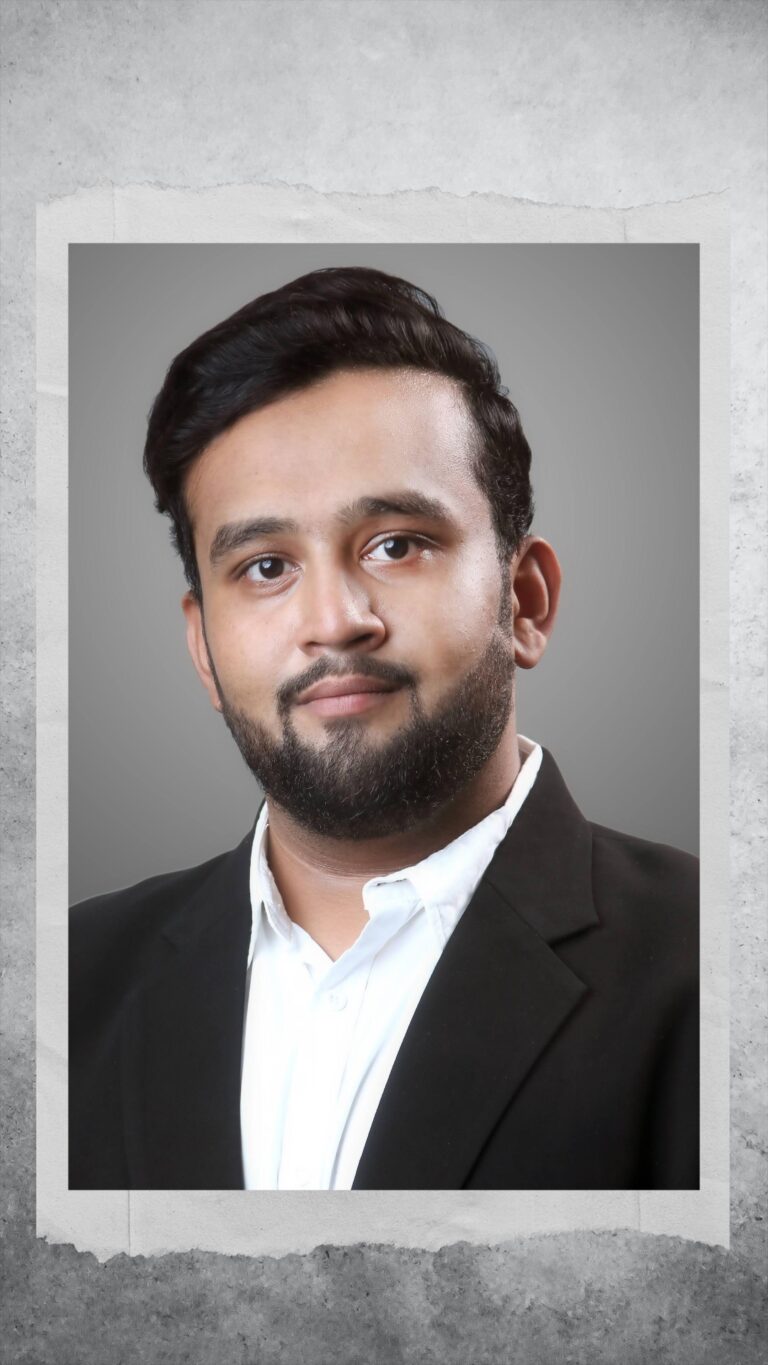
About the Author